
Water Heater
Water Heater Installation
Water heater installation across Brooklyn and every NYC borough, tank or tankless. Choosing between the two — and sizing whichever you pick correctly — makes the difference between hot water you never think about and a system that frustrates the household daily for the next decade.
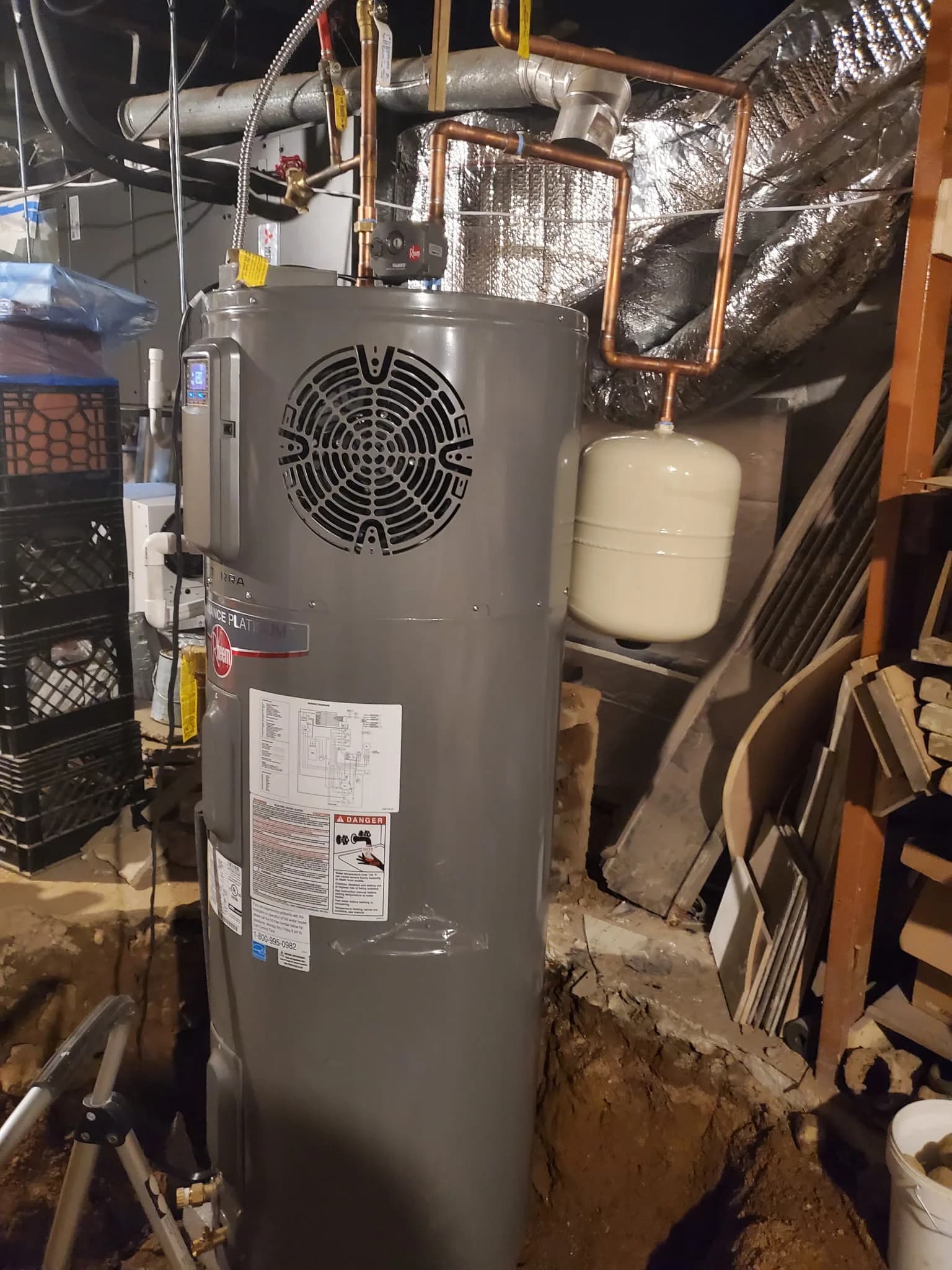
Tank water heaters remain a solid, cost-effective choice for most NYC homes. They are cheaper to install, simpler to service, tolerant of the venting and gas capacity that already exists in older buildings, and perfectly adequate for a household whose hot water demand comes in predictable waves. Tankless units offer continuous hot water and reclaim the floor space a tank occupies, which is genuinely valuable in a small apartment or a tight utility closet — but they cost more upfront, and in older buildings they often require new venting and a gas line capable of a much higher input than the tank they are replacing. We walk through those tradeoffs against your actual usage before recommending either, not after equipment has been ordered.
Sizing is where installations most often go wrong, and the consequences last as long as the unit does. For a tank, capacity and recovery rate have to match the household's peak demand — the morning where two showers, a dishwasher, and a load of laundry overlap — not its average. An undersized tank runs cold in the middle of that peak no matter how well it was installed. For tankless, the constraint is different: the unit has to deliver a required temperature rise at a required flow rate, and New York's cold winter groundwater temperature makes that rise larger here than the manufacturer's headline numbers usually assume. A tankless unit sized on a warm-climate spec sheet will disappoint in January.
Installation includes proper venting, gas or electric connection, and code-compliant water and drain lines, with attention to relief valve discharge routing and any required expansion tank. That last item catches a lot of people: on a system with a backflow preventer or pressure-reducing valve at the service entry — common across the city — the water has nowhere to expand as it heats, which drives pressure up and shortens the life of the tank and everything downstream of it. An expansion tank is not an upsell in that situation; it is what makes the installation correct.
We handle removal and disposal of the old unit as part of the job, and we plan the work around your building's real constraints — stair access, closet dimensions, existing flue arrangements, and whether the shutoff valves that will be needed actually still function. Across Brooklyn, Queens, the Bronx, Manhattan, Staten Island, and Long Island, the difference between a clean installation and a difficult one is usually decided before any equipment arrives, in whether those things were checked in advance.
Warning Signs
Signs You Need Water Heater Installation
Existing water heater is 10+ years old
Running out of hot water during normal household use
Rusty or discolored hot water, or water seeping from the body of the tank
Repairs on the same unit are becoming a recurring expense
Renovating a bathroom or kitchen and need relocated hot water supply
Interested in switching from tank to tankless for space or efficiency
Building an addition or finishing a basement requiring new hot water capacity
Adding a bathroom, which changes peak demand beyond what the current unit was sized for
Our Process
How It Works
Hot water demand assessment
We size against your household's peak demand — the overlapping morning shower, dishwasher, and laundry — rather than an average, since peak is what actually runs a unit out of hot water.
Survey the existing setup
We check venting, gas capacity or electrical service, shutoff valves, drain routing, and access before recommending equipment, because those constraints decide what is realistic in your building.
System selection
We lay out tank versus tankless against your space, budget, fuel type, and demand — including the honest case for staying with a tank when that is the better answer.
Old unit removal
The existing unit is drained, disconnected, and removed from the property, including disposal.
Installation
The new unit is set and connected with code-compliant venting, gas or electrical, water lines, relief valve discharge routing, and an expansion tank where the system requires one.
Testing and handover
We verify temperature, recovery, pressure, and safety shutoffs under load, then walk you through the shutoffs, the thermostat setting, and what maintenance the unit actually needs.
Repair vs. Replacement
Which One Actually Makes Sense
Repair Often Makes Sense When
- The tank body is sound and the fault is a single component — a thermostat, element, thermocouple, or valve
- The unit is under roughly eight years old and this is its first real repair
- Hot water capacity is still adequate for the household and the complaint is a specific malfunction, not a gradual decline
Replacement Often Makes Sense When
- Hot water is rusty or discolored, or water is seeping from the body of the tank rather than a fitting
- The unit is at or past its typical service life and repairs are becoming repeat visits
- Capacity no longer matches the household — a bathroom was added, or the unit was undersized from the start
- You are converting fuel type, relocating the unit, or moving to tankless for space reasons
Plenty of the units we are called out to install turn out to be repairable, and we will tell you when that is the case. Age by itself is not a reason to replace a water heater that is holding temperature, recovering normally, and showing no tank corrosion — the tank's condition is what matters, not the date on the label.
Pricing Guidance
Typical Cost Factors
Water heater installation costs depend on the unit type, sizing, and what venting or line work is needed, so pricing follows an on-site assessment. What typically factors into the estimate:
Final pricing is confirmed after assessing your existing setup, chosen unit, and any required venting or line work.
NYC Considerations
What's Different About NYC Housing
- Many NYC buildings have water heaters in tight utility closets or shared mechanical rooms, which affects what unit sizes and venting configurations are practical
- Tankless conversions in older buildings sometimes require new venting entirely, since older gas water heaters often shared a chimney with the boiler
- Older gas services in prewar buildings may not support the much higher input a tankless unit demands, which has to be verified before equipment is selected rather than discovered on installation day
- Co-op and condo buildings may require board approval before altering venting, gas lines, or electrical service tied to a shared system
- New York's cold winter groundwater means a tankless unit has to achieve a larger temperature rise here than in most of the country, so sizing off a generic spec sheet leads to disappointing winter performance
- Long Island homes with more basement space often have more flexibility for tank sizing than tighter city installations
Our Work
Before & After
Photo gallery of specific completed jobs coming soon — here's what the visit typically looks like.
Water Heater Installation photos coming soon
Water Heater Installation photos coming soon
Reviews
What Homeowners Say
“I had a leak in my living room ceiling and couldn't figure out where it was coming from. Keon and his employee showed up quickly after I reached out. They were professional, patient, and took the time to explain everything to me.”
Lisa B.
Brooklyn, NY · Pipe Repair
“Worked on the complicated pipes in our 125-year-old home. We were satisfied with the work and would hire again.”
Makeba D.
Brooklyn, NY · Pipe Repair
“Keon was able to come the same day. He was very meticulous pinpointing the issue and tried to be as minimally invasive as possible.”
Elias Z.
Brooklyn, NY · Pipe Repair
Service Area
Water Heater Installation Across New York
Choose your borough for local details and neighborhood coverage.
FAQ
Frequently Asked Questions
The unit type and what your existing setup can reuse drive the cost more than anything else — a like-for-like tank swap and a tankless conversion needing new venting and gas work are very different jobs. We assess venting, gas or electrical capacity, and access first, then give you the number before ordering anything.
For households short on space or with high simultaneous hot water demand, often yes. For many others a standard tank remains the more economical choice, especially in older buildings where a tankless conversion also means new venting and a gas line upgrade. We will give you the honest case for both rather than defaulting to the larger job.
Sizing follows peak demand, not average — the overlapping morning shower, dishwasher, and laundry is what actually runs a tank cold. Number of bathrooms, household size, and usage timing all feed into it, and we calculate it during the estimate rather than matching whatever was there before.
Often, yes. If the tank body is sound and a single component failed, repair is usually the better value. Replacement is the right call when the tank itself is leaking or producing rusty water, when repairs have become repeat visits, or when capacity no longer matches the household. We will tell you which situation you are in.
Most straightforward tank replacements are completed in a few hours. Tankless conversions take longer, particularly where new venting or gas line work is required, and those are usually planned as a full-day job.
Yes. Our installation partners handle gas, electric, and hybrid heat-pump water heaters, and can advise on whether a fuel-type change makes sense given what your building already supports.
Yes — draining, disconnecting, removing, and disposing of the old unit is included with the installation.
You do if your system has a backflow preventer or pressure-reducing valve at the service entry, which is common across the city. Without one, heated water has nowhere to expand and system pressure climbs, shortening the life of the new tank. We check for this during the assessment and include it in the quote when it applies.
Related Services
You May Also Need
Before You Book
Worth Knowing
From the Blog
More on Water Heater Installation
Boiler vs Water Heater: What's the Difference?
They're often confused, but a boiler and a water heater do very different jobs — and many NYC homes need both.
Tankless vs Tank Water Heaters: Which Is Right for Your NYC Home
The right choice depends less on brand and more on your household's hot water habits and available space.
Water Heater Installation Guide for Brooklyn Homeowners
Replacing a water heater in a Brooklyn brownstone or co-op comes with a few local wrinkles worth planning for.
Need Water Heater Installation?
Call now for same-day scheduling across New York City and Long Island.