Sewer
Sewer Repair
Sewer line repair across Brooklyn, Queens, Staten Island, and the rest of NYC. Sewer problems here frequently trace back to aging clay or cast-iron laterals, tree root intrusion, or ground shifting near older foundations — and the right repair depends entirely on which of those it actually is. We diagnose with a camera before anyone digs.
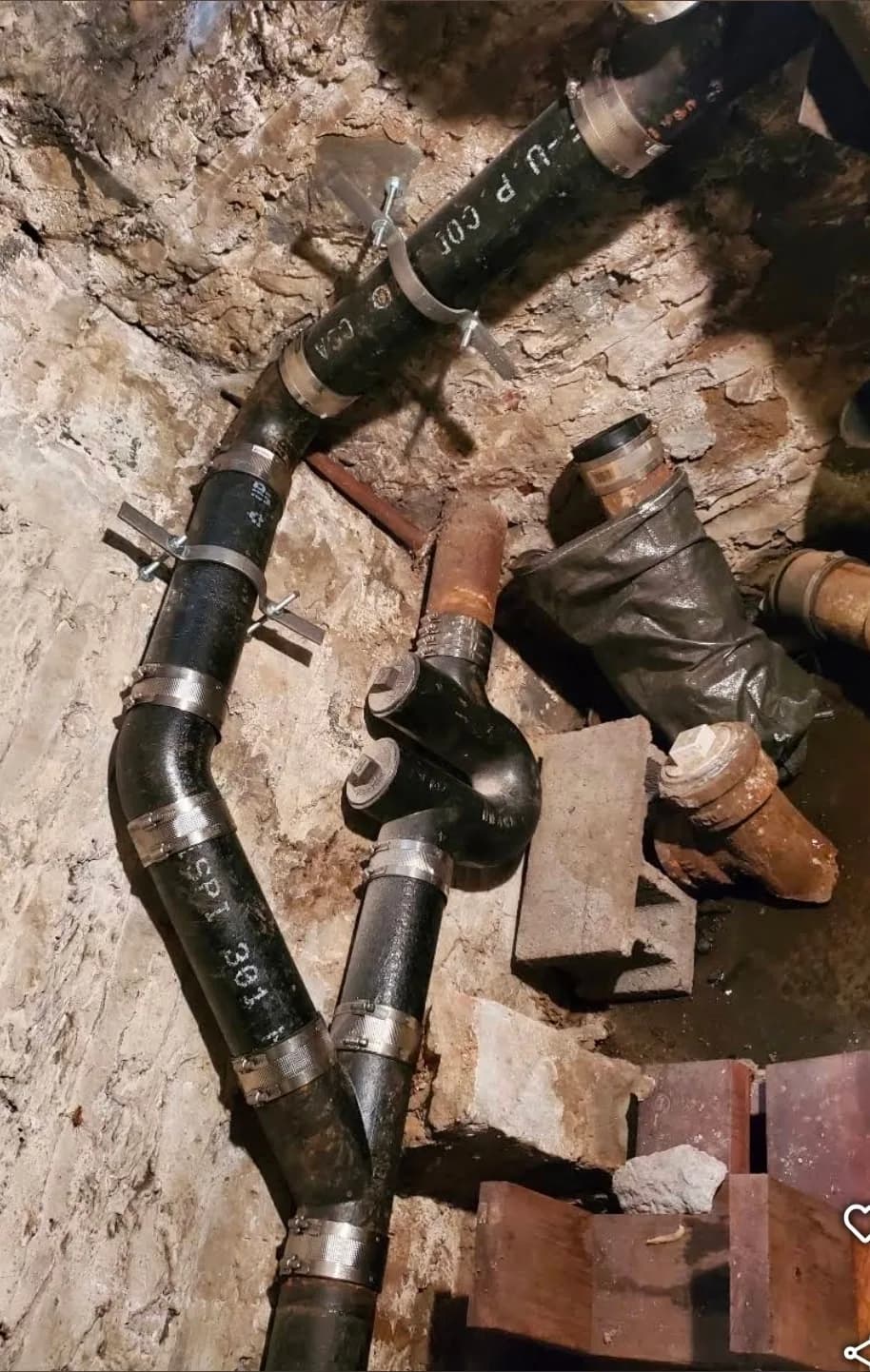
Many homes across Brooklyn, Queens, and Staten Island still have their original clay or cast-iron sewer laterals connecting to the city main, and a great many of those lines are decades past the service life they were designed for. Vitrified clay was the standard for residential laterals well into the mid-twentieth century, laid in short sections with mortared joints. Those joints are the weak point: as the ground settles over sixty or eighty years, sections shift out of alignment, the seal opens, and the line starts taking on soil, water, and roots. Cast iron fails differently — it corrodes from the inside, thinning until a section cracks or the bottom of the pipe channels out entirely.
Tree roots are the single most common cause we find on tree-lined residential blocks. Roots do not break into a sound pipe; they find the small amount of moisture and vapor escaping from a joint that has already opened, then grow toward it and expand inside the line. What starts as a few hair roots at one joint becomes a dense mass that catches paper and solids, and the first symptom a homeowner notices is usually a slow toilet or a backup at the lowest drain in the house — long after the pipe itself began failing.
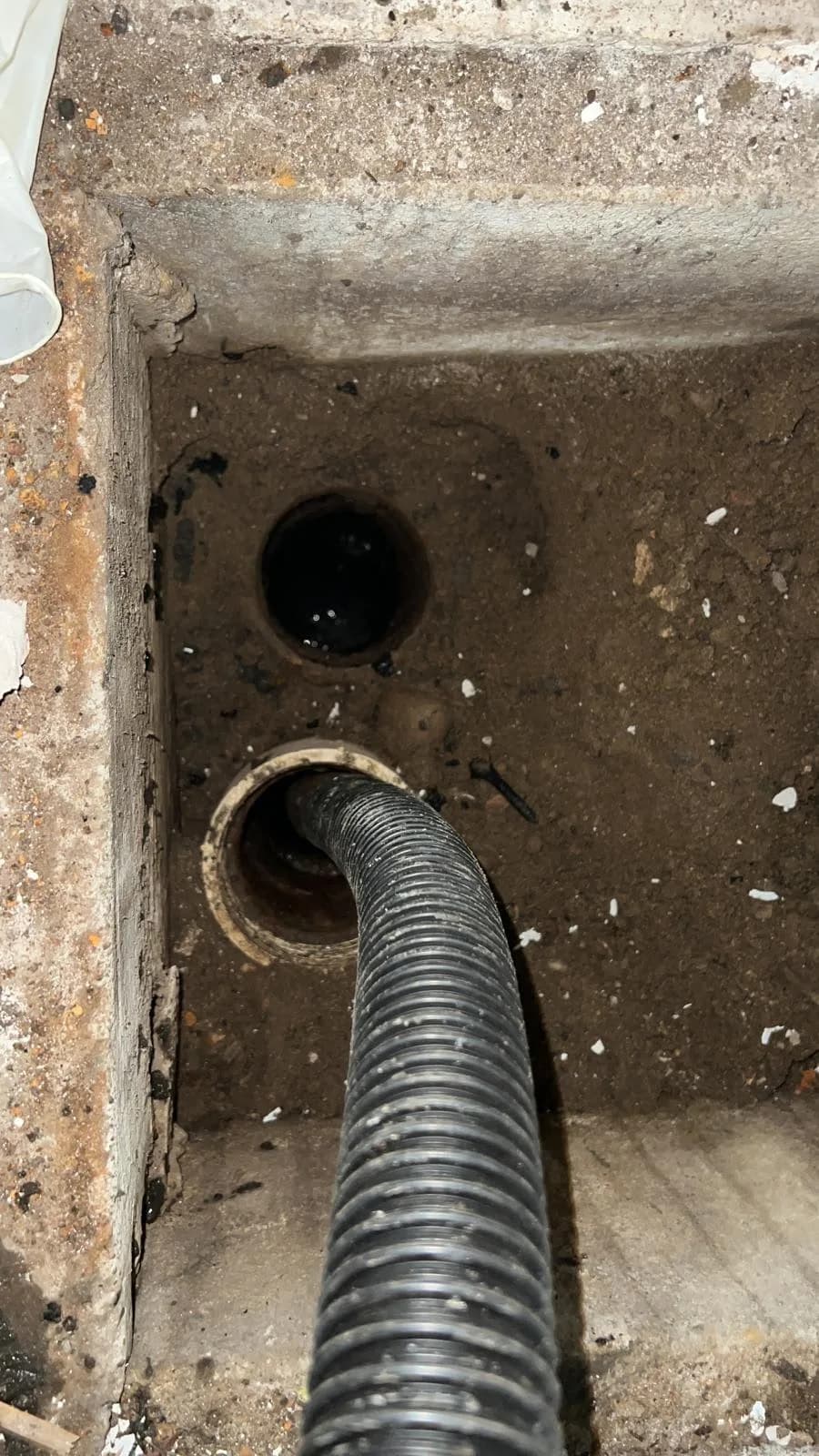
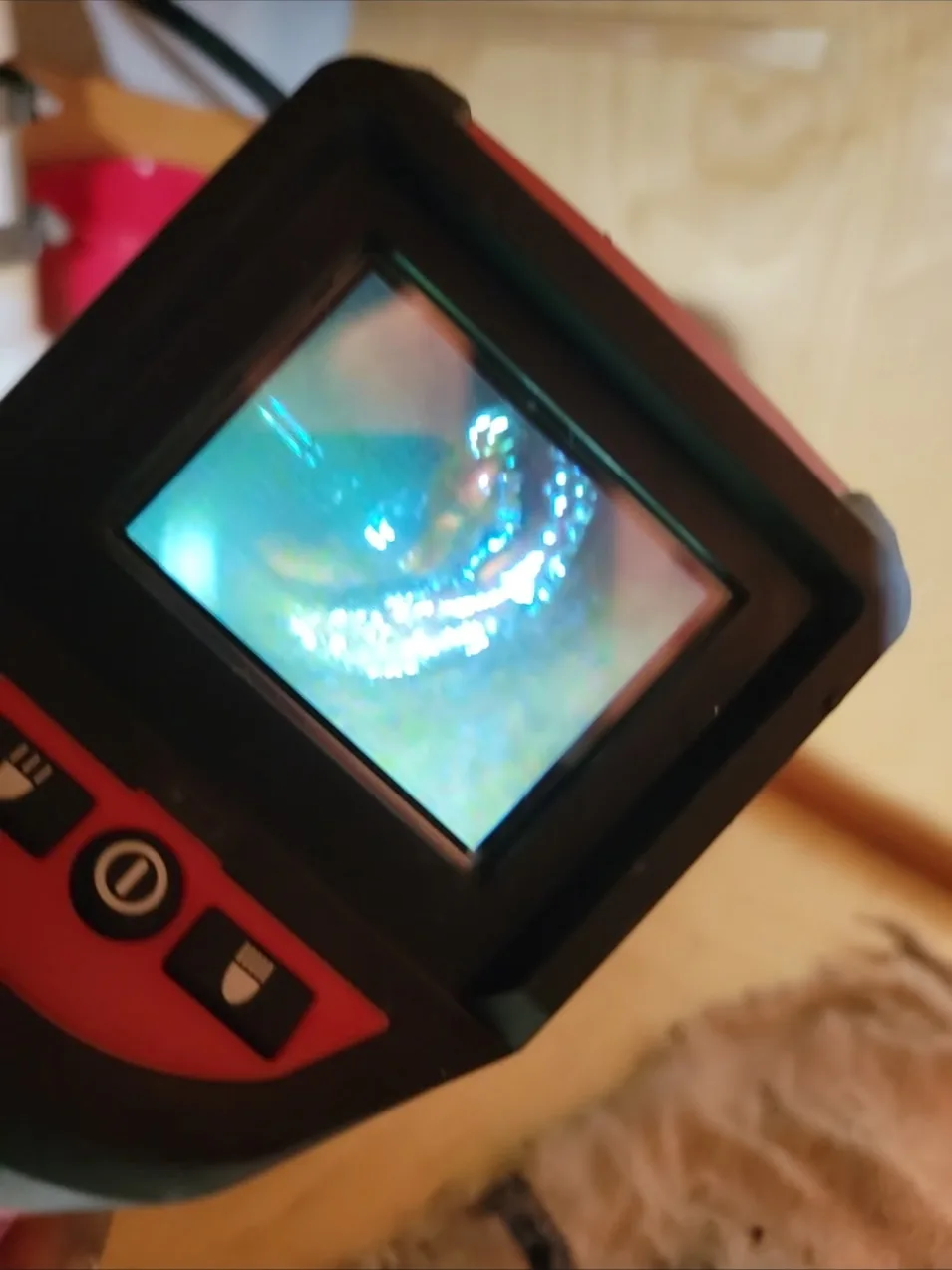
We always start with a camera inspection, and we do it before quoting, not after. Sewer work is one of the few residential repairs where the cost difference between the right answer and the wrong one is enormous: a single offset joint that can be spot-repaired is a fundamentally different job than a line that has bellied across twenty feet and lost its slope. Video tells us where the failure is, how far down, how long a section is affected, and whether the rest of the run is sound — none of which can be inferred from the symptoms inside the house.
With the line on video, we recommend the least invasive method the site actually allows. Spot repair addresses a single failed section. Trenchless methods — pipe lining or pipe bursting, depending on the damage — can rehabilitate a longer run through existing access points instead of opening the full length of a yard, which matters a great deal on a Brooklyn rowhouse lot where the line runs under a finished patio or a shared walkway. Open excavation is still the right answer sometimes, particularly for a collapsed section or where slope has to be rebuilt, and we will say so plainly rather than selling a trenchless repair that would not hold.
Warning Signs
Signs You Need Sewer Repair
Multiple drains backing up throughout the home, especially the lowest fixtures
Sewage odor in the yard, basement, or near a floor drain
Unusually lush or soggy patches of lawn above the line
Gurgling toilets when water runs elsewhere in the house
Visible settling, sinking, or cracking in the yard or walkway above the line
Backups that recur every few months no matter how often the line is cleared
Slow drainage across the whole house rather than at one fixture
Rodent or insect activity near a basement drain, which can indicate a break in the line
Common Causes
What Usually Causes This
Realistic explanations, not a diagnosis of your specific property — an on-site visit confirms the actual cause.
- Root intrusion at pipe joints, especially in clay lateral lines running under tree-lined streets
- Offset or separated joints in aging clay or cast-iron pipe as the ground settles over decades
- Cracking or collapse in cast-iron pipe as it corrodes from the inside out
- Bellied sections where a length of pipe has sunk, creating a low point where waste and paper collect
- Grease and debris buildup narrowing an already-compromised line until it backs up
- Ground movement or load from a driveway, extension, or heavy landscaping installed over the line after the fact
- Improper repairs from a previous owner — mismatched fittings or a patched section that never restored the line's slope
Our Process
How It Works
Camera diagnosis
We run a camera the full length of the lateral to confirm the cause, the exact distance from the access point, and whether the rest of the line is sound — before any price is quoted.
Locate and mark
The failure point is located and marked at grade so you can see exactly where work would happen and what is above it.
Repair plan and options
We present the realistic options for your specific line — spot repair, lining, bursting, or open excavation — with the tradeoffs of each explained rather than a single take-it-or-leave-it number.
Coordination and permits
Where the work crosses into the sidewalk, street, or permit-required territory, that portion is coordinated through our licensed partner network before anything is opened.
Repair execution
The damaged section is repaired or replaced using the agreed method, with excavation kept to the minimum the repair actually requires.
Camera verification and restoration
A follow-up camera pass confirms the line is clear, correctly sloped, and sealed, and the work area is backfilled and restored.
Repair vs. Replacement
Which One Actually Makes Sense
Repair Often Makes Sense When
- Camera inspection shows damage isolated to one section or joint, with the rest of the line in reasonable condition
- The pipe material and slope elsewhere in the line are still sound
- Site access allows a trenchless spot repair without disturbing the full run
Replacement Often Makes Sense When
- The camera shows multiple failure points along the same line, not just one
- The pipe has bellied or lost slope across a long section, which a spot repair can't correct
- The line is original clay or cast-iron and repeated repairs are becoming the pattern
We always inspect with a camera before recommending either option — the extent of damage on video, not the pipe's age alone, determines whether a spot repair or a fuller replacement makes sense.
Pricing Guidance
Typical Cost Factors
Sewer repair costs vary widely based on how much of the line is affected and what repair method the site allows, so estimates follow a camera inspection rather than a flat rate. What typically drives the cost:
Final pricing follows the camera inspection and depends on the confirmed extent of damage and site access.
NYC Considerations
What's Different About NYC Housing
- Original clay and cast-iron laterals connecting to the city main are common across older Brooklyn, Queens, and Staten Island blocks, and many are well past their intended service life
- Street trees planted decades ago have root systems that frequently intersect older lateral lines, especially on tree-lined blocks in neighborhoods like Forest Hills and Park Slope
- Excavation near a building's foundation or a shared property line may require coordination with a neighbor or, on some blocks, a permit if it affects the sidewalk or street
- Staten Island's larger lots and private laterals mean more yard-based repairs than the tighter urban lots common elsewhere in the city
- In attached rowhouses and townhouses, the lateral often runs under a narrow side or rear yard shared with adjoining properties, which shapes both access and which repair methods are realistic
Our Work
Before & After
Photo gallery of specific completed jobs coming soon — here's what the visit typically looks like.
Sewer Repair photos coming soon
Sewer Repair photos coming soon
Reviews
What Homeowners Say
“I had a leak in my living room ceiling and couldn't figure out where it was coming from. Keon and his employee showed up quickly after I reached out. They were professional, patient, and took the time to explain everything to me.”
Lisa B.
Brooklyn, NY · Pipe Repair
“Worked on the complicated pipes in our 125-year-old home. We were satisfied with the work and would hire again.”
Makeba D.
Brooklyn, NY · Pipe Repair
“Keon was able to come the same day. He was very meticulous pinpointing the issue and tried to be as minimally invasive as possible.”
Elias Z.
Brooklyn, NY · Pipe Repair
Service Area
Sewer Repair Across New York
Choose your borough for local details and neighborhood coverage.
FAQ
Frequently Asked Questions
There is no honest flat rate for sewer work — a single offset joint that can be spot-repaired and a bellied line that has lost its slope across twenty feet are different jobs by an order of magnitude. That is exactly why we camera the line before quoting rather than after, so the number you get reflects what is actually wrong.
Multiple drains backing up at once — especially the lowest fixtures in the house, like a basement floor drain or first-floor toilet — is the clearest sign of a main line issue rather than a single clog. A single slow sink upstairs while everything else drains normally is almost never the sewer line.
Not always. Trenchless methods — lining or bursting depending on the damage — can address many sewer problems through existing access points with far less excavation. Whether they are viable for your line depends on what the camera shows and on site conditions, which is a question we can answer specifically rather than generally.
Tree root intrusion at joints in older clay laterals, joints that have offset as the ground settled, and cast-iron pipe corroding from the inside are the three we see most. Roots are the most common on tree-lined residential blocks, and they almost always enter at a joint that had already opened.
Backups affecting multiple drains should be treated urgently, because the next backup puts sewage inside the home rather than just slowing it down. A line that has started backing up will keep doing so at shortening intervals — clearing it buys time, not a fix.
Yes. Every sewer repair estimate we give is based on a camera inspection, not on symptoms or guesswork, and we would rather show you the footage than describe it.
Sometimes, and when that is the right answer we will say so. Cutting roots or jetting the line restores flow, and if the pipe underneath is structurally sound that may be all it needs for years. If the camera shows a break, an offset, or a belly, cleaning is a temporary measure and the backups will return.
Yes. Attached properties and multi-family buildings are a large share of our sewer work, and they bring their own constraints — shared side yards, laterals running under neighboring property, and coordination with building management or a super where the line serves more than one unit.
Related Services
You May Also Need
From the Blog
More on Sewer Repair
Top 10 Signs of Sewer Problems
Multiple slow drains at once is rarely a coincidence — here's what your home is trying to tell you.
How Often Should You Get a Sewer Camera Inspection?
For most homes, a camera inspection isn't an annual task — but a few situations make it worth doing right away.
What Homeowners Should Know About Trenchless Sewer Repair
Not every sewer repair means digging up your yard — but trenchless methods aren't the right fit for every situation either.
Need Sewer Repair?
Call now for same-day scheduling across New York City and Long Island.