Pipe & Drain
Pipe Repair
Pipe repair across NYC for leaks, corrosion, and failed joints — in prewar buildings where galvanized, copper, and newer PEX often share a single system. A small leak behind a wall or under a floor rarely stays small. We locate the source quickly and repair it with minimal disruption to finished surfaces.
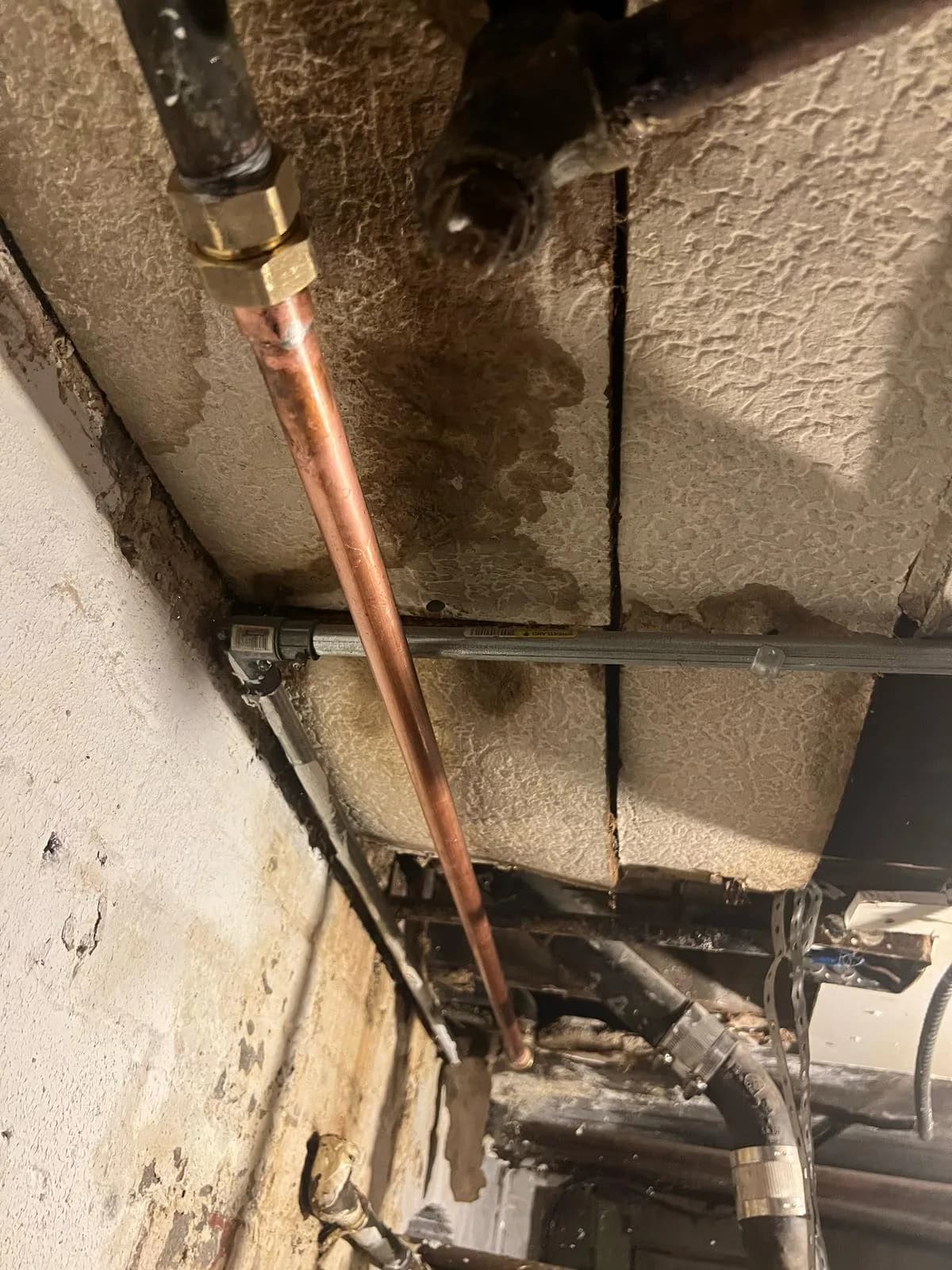
Older NYC buildings often mix galvanized steel, copper, and more recent PEX or PVC in the same system, usually from decades of piecemeal repairs by different hands. Those transitions between materials are among the most common failure points in the whole building, because dissimilar metals in contact corrode faster than either would alone, and because a fitting installed as a quick fix twenty years ago was rarely chosen with the next twenty years in mind. Before recommending anything, we identify what the pipe actually is and how it failed — the same visible leak has a completely different prognosis in sound copper than in galvanized steel near the end of its life.
Pinhole leaks in aging copper are a signature problem in homes built before the 1980s across Queens and Brooklyn. They come from corrosion working outward from the inside of the pipe, which means the pinhole you can see is rarely the only thin spot on that run — it is simply the first one to open. Galvanized steel fails the opposite way from the perspective of a homeowner: it rusts inward, restricting flow long before it leaks, so the first symptom is usually declining water pressure or rust-colored water rather than anything visibly wet.
Finding the leak is often the harder half of the job. Water travels along joists, inside wall cavities, and across framing before it stains a ceiling, so the wet spot is frequently nowhere near the failure. We narrow the location with moisture metering, thermal indicators, and isolation pressure testing before opening any finished surface, because the difference between a targeted eight-inch opening and exploratory demolition is the difference between a repair and a renovation.
Repairs range from re-soldering or replacing a single failed joint, to cutting out and replacing a short corroded section, to sleeving or rerouting a run that cannot be reached where it failed. We match materials and transitions properly rather than defaulting to whatever is fastest, and every repair is pressure tested before the access is closed — finding out the joint weeps only after the drywall is back up helps nobody.
Warning Signs
Signs You Need Pipe Repair
Water stains on ceilings, walls, or floors
Unexplained drop in water pressure
Sound of running water when all fixtures are off
Musty smell or visible mold near walls or baseboards
Unusually high water bill with no obvious cause
Rust-colored or discolored water from hot or cold taps
Warm or damp spots on a floor, which can indicate a leak in a supply line below
Paint or wallpaper bubbling, or a ceiling beginning to sag
Common Causes
What Usually Causes This
Realistic explanations, not a diagnosis of your specific property — an on-site visit confirms the actual cause.
- Pinhole leaks in aging copper pipe, common in homes built before the 1980s, caused by internal corrosion over decades
- Galvanized steel pipe rusting from the inside out, often invisible until a leak or pressure drop shows up
- Failed solder joints or fittings, especially at transitions between different pipe materials
- Physical damage from a nail, screw, or renovation work that punctured a line inside a wall or floor
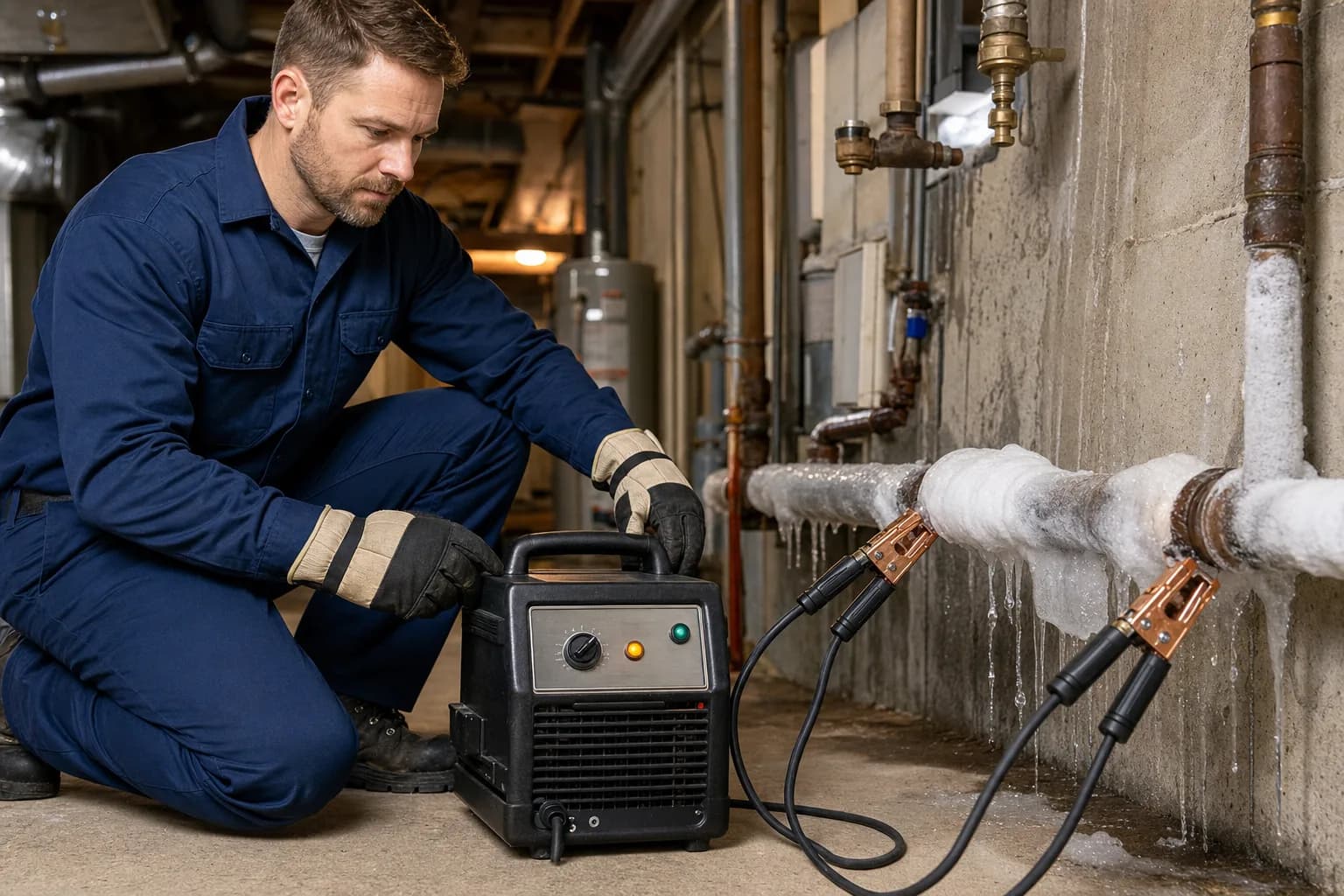
- Freeze-related splits in exposed or poorly insulated piping
- Excessive water pressure that stresses joints and fittings over time
Our Process
How It Works
Leak diagnosis
We trace the source using moisture metering, thermal indicators, and isolation testing — water travels before it shows, so the stain is rarely above the failure.
Identify pipe material and failure mode
Copper, galvanized, PEX, and PVC fail differently and are repaired differently; knowing which you have determines whether this is a one-joint fix or a symptom of a run at end-of-life.
Access and assessment
We determine the minimum access required to reach the damaged section, keeping openings as small as the repair allows.
Repair or section replacement
The damaged pipe or joint is repaired or replaced with properly matched materials and transition fittings, not whatever is quickest to fit.
Pressure test
The repaired line is pressure tested and watched under load to confirm the leak is fully resolved before anything is closed up.
Report on surrounding pipe
We tell you honestly what the rest of that run looked like while it was open — whether this was an isolated failure or the first of several.
Repair vs. Replacement
Which One Actually Makes Sense
Repair Often Makes Sense When
- The leak is isolated to a single joint or short section of otherwise sound pipe
- The surrounding piping is copper or PEX in reasonable condition, not galvanized nearing end-of-life
- This is the first leak in this section, not a recurring pattern
Replacement Often Makes Sense When
- The building still has galvanized supply lines showing rust-colored water or repeated leaks in different spots
- Pinhole leaks have appeared more than once along the same general run of copper pipe
- Water pressure or flow has been gradually declining, suggesting internal corrosion throughout the line, not just at the repair point
A single isolated leak is almost always a repair, not a signal to replace the whole system — we only recommend broader repiping when the pattern of failures points to the pipe material itself being at the end of its service life.
Pricing Guidance
Typical Cost Factors
Pipe repair costs depend on where the pipe is, what it's made of, and how much needs to be exposed to reach it, so pricing follows an on-site assessment rather than a flat number. What typically moves the estimate:
Final pricing is confirmed after we locate the leak and assess the pipe material and access required.
NYC Considerations
What's Different About NYC Housing
- Many prewar buildings mix galvanized, copper, and newer PEX or PVC in the same system, often from decades of piecemeal repairs — identifying what's actually there is the first step
- Shared walls between attached rowhouses and townhouses mean a leak's water damage doesn't always show up on the same side as the actual pipe failure
- Finished basements in Queens and Staten Island homes often require careful access planning to avoid unnecessary demolition
- Co-op and condo buildings may require notifying building management before opening walls or accessing shared risers, and a leak in a riser is usually a building responsibility rather than a unit owner's
- In multi-story buildings, shutting down a riser to make a repair affects units above and below, so timing often has to be coordinated rather than done on the spot
Our Work
Before & After
Photo gallery of specific completed jobs coming soon — here's what the visit typically looks like.
Pipe Repair photos coming soon
Pipe Repair photos coming soon
Reviews
What Homeowners Say
“I had a leak in my living room ceiling and couldn't figure out where it was coming from. Keon and his employee showed up quickly after I reached out. They were professional, patient, and took the time to explain everything to me.”
Lisa B.
Brooklyn, NY · Pipe Repair
“Worked on the complicated pipes in our 125-year-old home. We were satisfied with the work and would hire again.”
Makeba D.
Brooklyn, NY · Pipe Repair
“Keon was able to come the same day. He was very meticulous pinpointing the issue and tried to be as minimally invasive as possible.”
Elias Z.
Brooklyn, NY · Pipe Repair
Service Area
Pipe Repair Across New York
Choose your borough for local details and neighborhood coverage.
FAQ
Frequently Asked Questions
It depends most on access and pipe material, not on the size of the leak itself — an exposed joint in an open basement and the same failure inside a finished wall are very different jobs. We locate the leak and assess access first, then give you the number before any work starts.
We use moisture meters, thermal indicators, and isolation pressure testing to narrow the location before opening any surface. Water runs along framing before it shows, so the visible stain is often well away from the actual failure — narrowing it properly is what keeps the opening small.
Isolated sections can be repaired, and if the rest of the system is sound that is usually the right call. But galvanized rusts from the inside along its whole length, so repeated leaks in different spots, declining pressure, or rust-colored water generally mean the material itself is at end-of-life and a broader repiping plan will cost less over time than a series of patches.
That pattern almost always means the pipe material is failing rather than a single joint. Pinhole leaks in copper and rust-through in galvanized both progress along the whole run, so the second and third leaks are usually the same process surfacing elsewhere — worth evaluating the run as a whole rather than patching again.
Active leaks should be treated as urgent. Beyond the water itself, sustained moisture inside a wall cavity causes structural and mold damage that costs far more to remediate than the plumbing repair would have. We offer same-day response for active leaks across every borough.
We keep access openings as small as the repair allows, and drywall patching can be arranged as part of the job — just tell us upfront so it is in the scope and the estimate.
Yes. Our technicians work with copper, PEX, PVC, and galvanized steel piping systems, including the transitions between them, which are where a lot of NYC failures actually occur.
If it is safe to reach, shut off the nearest supply valve, or the main if the leak is not isolated to one fixture. Keep water away from outlets and electrical panels, and move what you can out of the affected area — containment before we arrive limits the damage considerably.
Related Services
You May Also Need
From the Blog
More on Pipe Repair
Why Pipes Burst During Winter
It's not the ice that breaks your pipe — it's the pressure buildup behind it. Here's the science and the fix.
Signs Your Home Still Has Galvanized Pipes
If your home was built before the 1960s, there's a good chance galvanized steel is still part of your plumbing.
Preventing Frozen Pipes in NYC Basements
Basements are the single most common freeze point in NYC homes — here's how to winterize yours.
Need Pipe Repair?
Call now for same-day scheduling across New York City and Long Island.