Boiler
Boiler Installation
A boiler that's oversized, undersized, or poorly vented will cost you comfort and money for the next 15-20 years. We start every installation with a proper load calculation for your specific home.
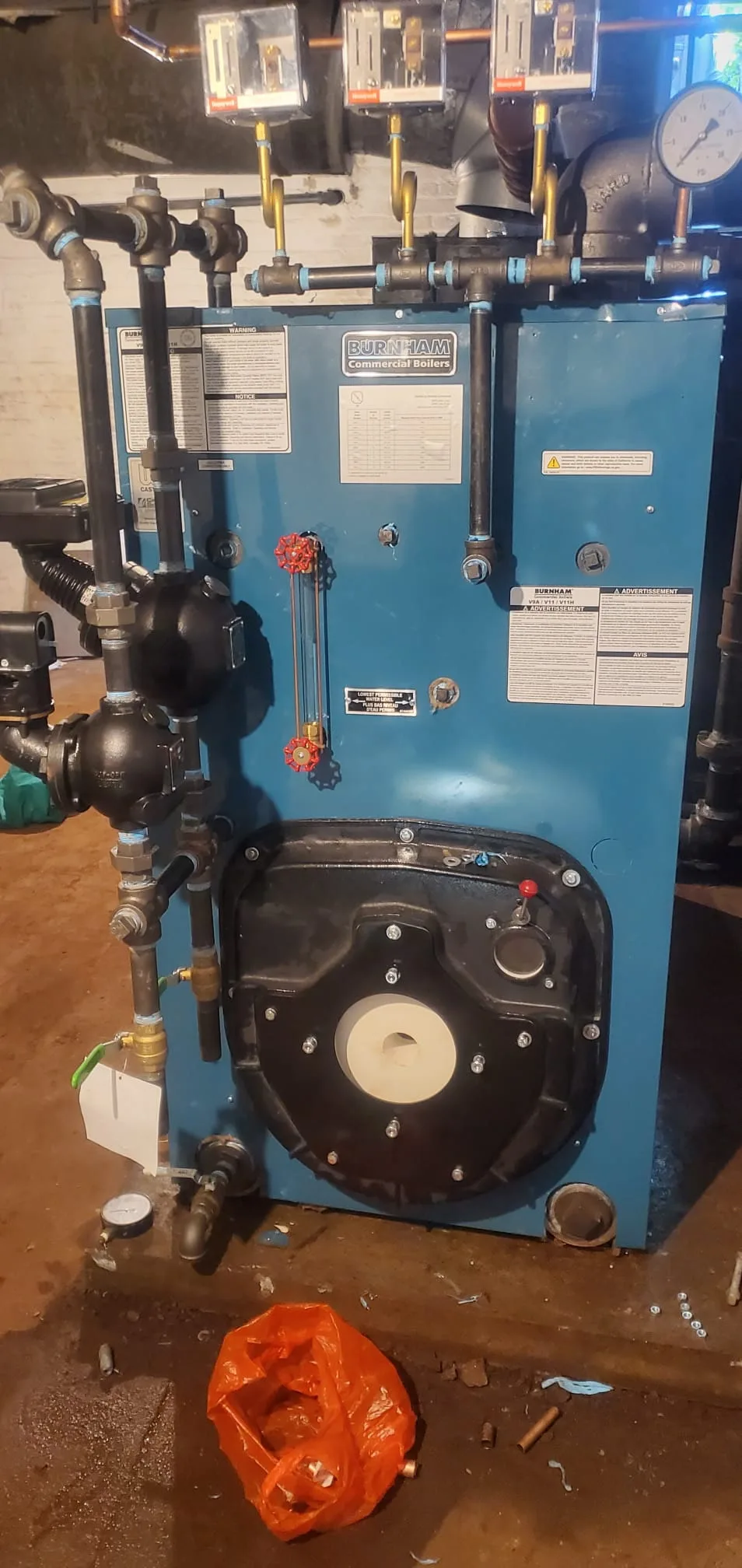
New York homes range from narrow rowhouses to detached Long Island properties, and boiler sizing has to account for square footage, insulation, radiator count, and domestic hot water demand. An installation done by eye rather than by calculation is one of the most common causes of high fuel bills and uneven heat.
Our installation partners handle gas and oil-fired boilers, condensing high-efficiency units, and combi boilers that also supply domestic hot water, with attention to proper venting, condensate drainage, and code-compliant gas or oil line work throughout.
Across Brooklyn, Queens, the Bronx, Manhattan, Staten Island, and Long Island, we've installed boilers in everything from single mechanical-room brownstones to multi-unit buildings with shared systems, so we plan around your building's actual constraints rather than a generic installation checklist.
Installation also covers fuel-type decisions that repair work never touches — oil-to-gas conversions, condensing versus atmospheric venting, and whether a combi unit that handles both heat and domestic hot water makes sense for your household's actual usage. We walk through these tradeoffs before ordering equipment, not after it's already on-site.
Warning Signs
Signs You Need Boiler Installation
Replacing a boiler older than 15-20 years
Adding heat to a finished basement, addition, or ADU
Converting from oil to high-efficiency gas
Persistent uneven heating that repairs haven't resolved
Planning a gut renovation that includes new mechanicals
Frequent repairs on the same aging unit that are adding up
Buying a home with a boiler nearing the end of its service life
Common Causes
What Usually Causes This
Realistic explanations, not a diagnosis of your specific property — an on-site visit confirms the actual cause.
- A boiler at or past its 15-20 year expected service life, where continued repairs cost more over time than a properly sized new system
- Converting from oil to gas for lower operating costs and reduced maintenance, a common upgrade across older NYC housing stock
- Adding heat to a previously unheated space — a finished basement, an addition, or an accessory dwelling unit — that the existing system wasn't sized to cover
- Persistent uneven heating or comfort complaints that repairs haven't resolved, often traced back to an undersized or oversized original installation
- A gut renovation or major remodel that includes replacing mechanical systems as part of the broader scope
- Storm, flood, or water damage to a basement-level boiler that requires full replacement rather than repair
Our Process
How It Works
Home heat-load assessment
We calculate the correct BTU output for your home's size, insulation, radiator layout, and hot water demand — not guessed from the old unit's rating.
System design
We select the boiler type (steam, hot-water, or combi), fuel source, and plan venting, piping runs, and control placement before any equipment arrives.
Site preparation
The mechanical room and access path are protected, and the old unit — if one exists — is safely disconnected and removed.
Professional installation
The new boiler is set, piped, and vented to current code, with permits and inspections handled as required for the scope of work.
Commissioning & safety testing
We run a full combustion analysis and pressure test to confirm the system is operating safely and efficiently before we leave.
Walkthrough & training
We walk you through thermostat operation, basic maintenance, and what to watch for during the system's first heating season.
Repair vs. Replacement
Which One Actually Makes Sense
Repair Often Makes Sense When
- The failure is a single component on a boiler that is otherwise sound and correctly sized for the building
- The unit is roughly mid-life for its type with no history of repeat failures
- Parts for the model are still readily available
- Heat is even across the building and fuel consumption has not been climbing year over year
Replacement Often Makes Sense When
- Repairs on the same unit have become a recurring annual expense
- There is rust, cracking, or corrosion on the boiler shell or heat exchanger itself, not just surface piping
- The original installation was oversized or undersized, so repairs fix the symptom while the comfort and fuel-cost problem remains
- You are converting fuel type, adding heated space, or replacing mechanicals as part of a larger renovation
A boiler that is old but well maintained, correctly sized, and heating evenly is not automatically a replacement candidate — plenty outlast newer units that were installed poorly. What actually justifies replacement is a pattern: repeat repairs, a compromised heat exchanger, or an original sizing mistake that no repair can correct. We will give you that comparison straight rather than quoting a new system by default.
Pricing Guidance
Typical Cost Factors
Boiler installation costs vary by boiler type, home size, and how much of the existing venting and piping can be reused, so we don't publish flat prices — but the main factors that move an installation estimate are consistent across jobs:
Final pricing depends on an on-site heat-load assessment, system selection, access, and the approved scope of work.
NYC Considerations
What's Different About NYC Housing
- Many NYC basements and mechanical rooms were built around equipment sizes common decades ago — newer high-efficiency boilers sometimes have different footprint or clearance requirements that need to be planned for
- Co-op and condo buildings may require board approval or advance notice before mechanical work begins, which we factor into project timelines
- Older brownstones and rowhouses often have narrow basement access points that affect how equipment is brought in and set
- Where a gas line conversion or new gas connection is involved, that portion is coordinated through our licensed partner network
- Permit and inspection requirements vary by borough and building type — we confirm what applies before work begins
- Shared-wall buildings and attached rowhouses sometimes require extra care around venting placement so exhaust doesn't affect a neighboring property
- Long Island homes on oil heat considering a gas conversion should confirm gas line availability at the property before committing to a system design
Our Work
Before & After
Photo gallery of specific completed jobs coming soon — here's what the visit typically looks like.
Boiler Installation photos coming soon
Boiler Installation photos coming soon
Reviews
What Homeowners Say
“I had a leak in my living room ceiling and couldn't figure out where it was coming from. Keon and his employee showed up quickly after I reached out. They were professional, patient, and took the time to explain everything to me.”
Lisa B.
Brooklyn, NY · Pipe Repair
“Worked on the complicated pipes in our 125-year-old home. We were satisfied with the work and would hire again.”
Makeba D.
Brooklyn, NY · Pipe Repair
“Keon was able to come the same day. He was very meticulous pinpointing the issue and tried to be as minimally invasive as possible.”
Elias Z.
Brooklyn, NY · Pipe Repair
Service Area
Boiler Installation Across New York
Choose your borough for local details and neighborhood coverage.
FAQ
Frequently Asked Questions
Installation costs depend on the boiler type, whether a fuel conversion is involved, and what venting the building can support, so a published flat price would be misleading. You get a clear, itemized estimate after an on-site heat-load assessment — before any equipment is ordered.
Most residential replacements are completed in one to two days, depending on how much venting and piping has to change. An oil-to-gas conversion or a switch to a condensing unit needing new venting typically runs to the longer end of that range.
Sizing comes from a heat-load calculation — square footage, insulation, window and radiator count, and domestic hot water demand — not from matching the old unit's rating. That matters because a great many existing NYC boilers were oversized to begin with, and copying that number forward carries the original mistake into the new system.
Often, yes. A single failed component on a sound, correctly sized boiler is a repair, and age alone does not change that. Replacement earns its cost when repairs have become annual, when the heat exchanger or shell itself is compromised, or when the original unit was sized wrong — because no repair fixes a sizing problem.
It depends on your hot water pattern more than your heating one. A combi handles both heat and domestic hot water from one unit and saves the space a separate water heater takes, which suits smaller households and tight mechanical rooms. Homes with high simultaneous hot water demand — several bathrooms in use at once — are usually better served by a separate system.
Yes. Narrow rowhouses, brownstones, and multi-unit buildings with tight mechanical rooms are a large share of what we install, and access planning for getting equipment in and out is part of the design stage rather than an installation-day surprise.
Yes, though these buildings often require board approval or advance notice before mechanical work begins, which we help coordinate into the project timeline.
Where permitting is required, that portion is coordinated through our licensed partner network — see our Licensing & Compliance page for how this works. We confirm what applies to your specific scope before work begins.
Usually, and the size of the improvement depends less on the efficiency rating than on what you are replacing. Correctly sizing a system that was previously oversized often produces a larger real-world saving than the efficiency percentage alone would suggest, because an oversized boiler short-cycles and wastes fuel regardless of how efficient it is on paper.
Related Services
You May Also Need
 Emergency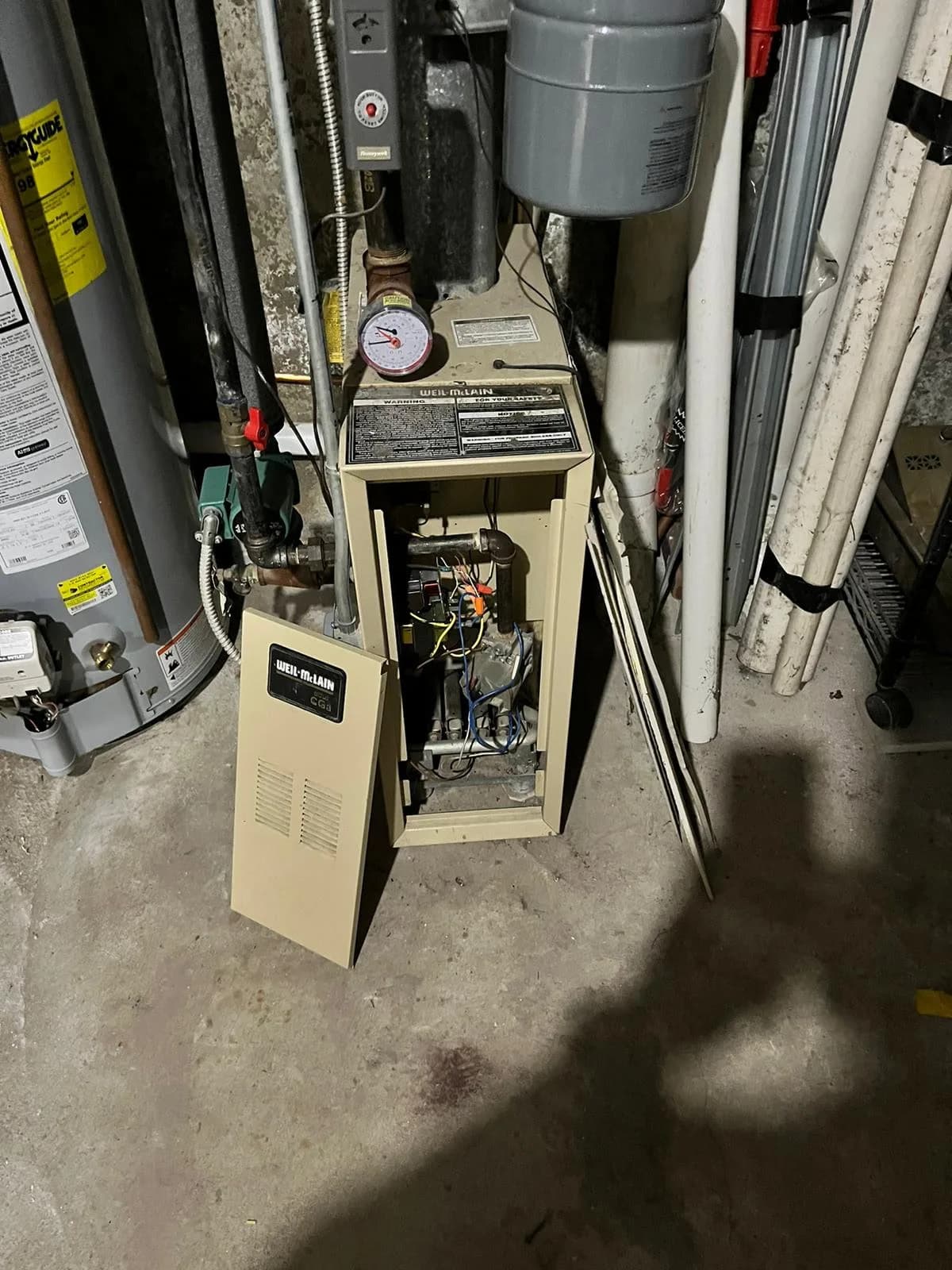
Before You Book
Worth Knowing
Seasonal servicing that catches the small faults before they become a mid-winter no-heat call.
Review financing optionsLarger installations and replacements can be spread across monthly payments.
Check current couponsActive discounts you can apply to this visit — worth a look before you book.
Read verified reviewsWhat homeowners across NYC say after we've finished the work.
From the Blog
More on Boiler Installation
Boiler vs Water Heater: What's the Difference?
They're often confused, but a boiler and a water heater do very different jobs — and many NYC homes need both.
Steam vs Hot-Water Boilers: What NYC Homeowners Should Know
Two very different systems, both common across NYC — here's how to tell which one heats your home.
Tankless vs Tank Water Heaters: Which Is Right for Your NYC Home
The right choice depends less on brand and more on your household's hot water habits and available space.
Need Boiler Installation?
Call now for same-day scheduling across New York City and Long Island.