Brooklyn · Boiler
Oil-to-Gas Conversion in Brooklyn
Off oil, onto gas, sized and vented properly. Serving homeowners throughout Brooklyn, from Park Slope to DUMBO.
Whichever end of that spectrum your home falls on, our technicians know the difference between a Bed-Stuy brownstone's original galvanized supply lines and a Bay Ridge two-family's more recent copper repipe, and they show up equipped for both. When it comes to oil-to-gas conversion, that context shapes how we approach every job in Brooklyn — from the tools we bring to the diagnostic steps we take first.
Brooklyn's housing stock is some of the oldest in the city, which cuts both ways on a conversion. Brownstones and rowhouses from Park Slope to Bay Ridge often still have masonry chimneys built for an oil burner and basement tanks installed decades ago, so the venting and tank questions tend to carry more weight here than the boiler itself. Attached construction also constrains where a sidewall vent can terminate.
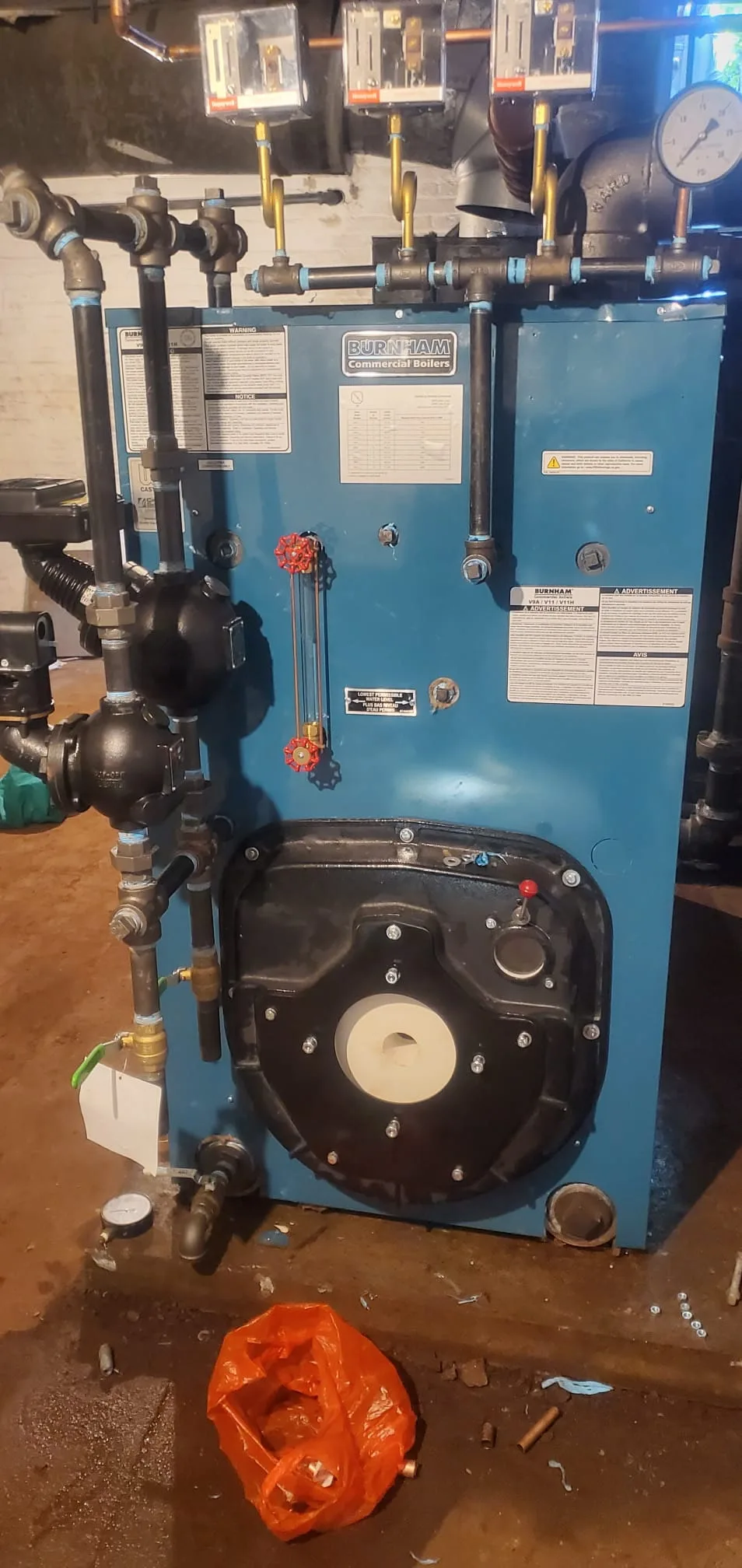
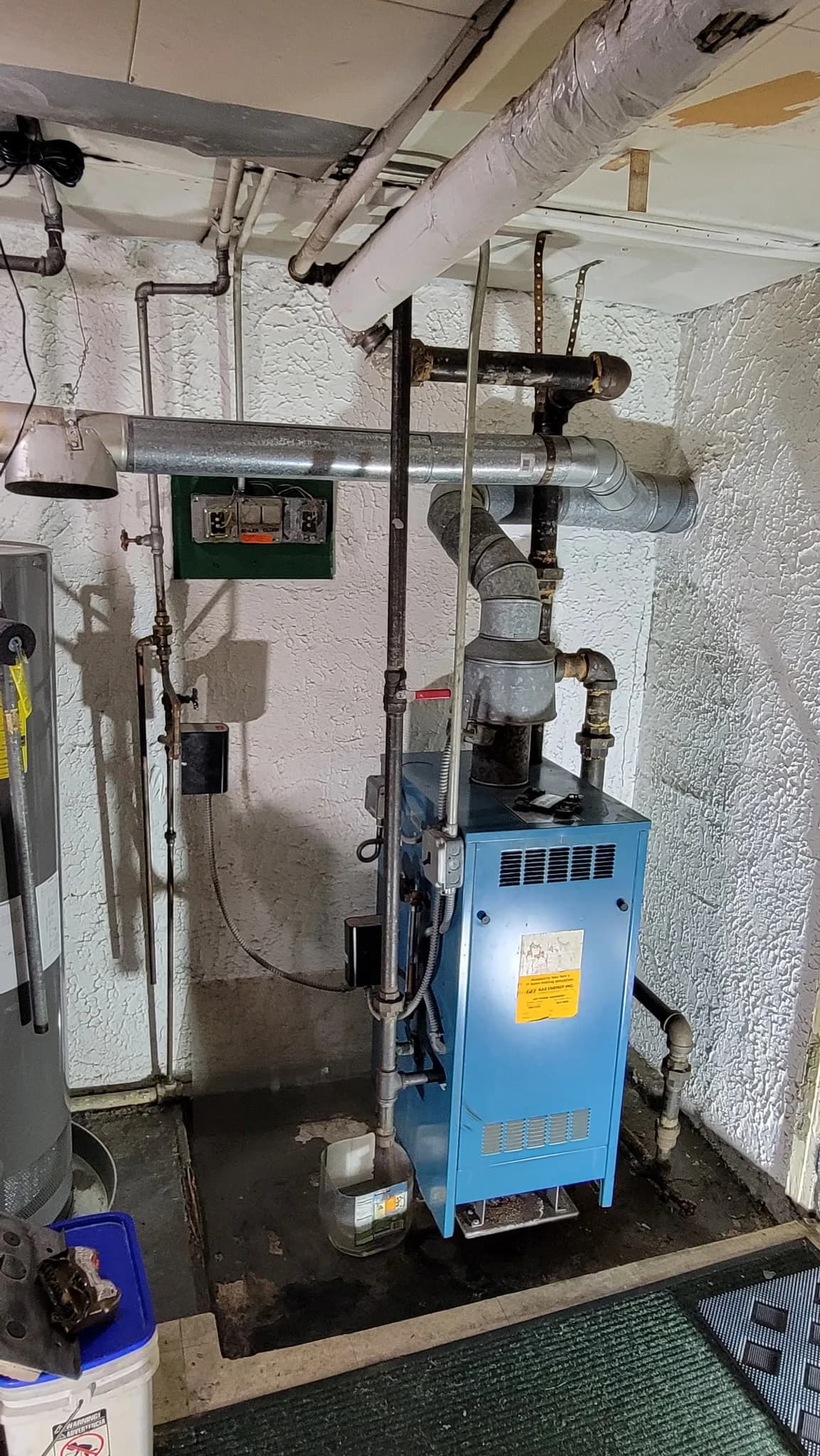
Venting is where conversion budgets get surprised. An old oil boiler typically vents into a masonry chimney that was built for it. A modern high-efficiency condensing gas boiler produces cooler, wetter exhaust that an unlined masonry chimney is not suited to, so the chimney either needs a properly sized liner or the unit gets direct-vented through a sidewall instead. Which one applies depends on the equipment chosen and the building — and on a row house or attached property, sidewall venting has to account for where the exhaust terminates relative to windows and the neighbour's property. This gets decided during planning, not on installation day. In Brooklyn specifically, we regularly see galvanized supply lines in un-renovated brownstones and clay or cast-iron sewer laterals affected by street tree roots, both of which factor into how we diagnose and price oil-to-gas conversion calls in the area.
For the full picture on this work — common causes, repair versus replacement, and what actually drives the cost — read our complete guide to oil-to-gas conversion.
Warning Signs
Signs You Need Oil-to-Gas Conversion in Brooklyn
Uneven heat the existing system has never resolved, suggesting it was sized wrong
Oil deliveries and oil heat have become the largest line in your running costs
The existing oil boiler is at or past its service life and repairs are recurring
Gas is already serving the block and neighbouring houses have converted
Our Process
How It Works
Confirm gas availability first
Before anything else, we help you establish whether the utility can serve your address, what they will charge, and how long their side will take — in writing. Every other step depends on this answer.
Heat-load calculation
We size the new boiler to the building, not to the old unit's rating. A conversion is the one chance to correct an oversizing mistake without paying extra for the privilege.
Survey the gas piping and electrical
Interior gas piping has to carry the new load, and existing runs sized for a cooktop will not. We check what can be reused and what has to be upsized before equipment is selected.
Decide the venting approach
Chimney liner or sidewall direct vent, decided against the equipment and the building — including where exhaust terminates on an attached or row property.
Plan the oil tank decommissioning
Removal or abandonment in place, scheduled as part of the project rather than left as an afterthought, with the condition of a buried tank assessed before the work is priced.
Permits and licensed work
Gas line work and permit-required portions are coordinated through our licensed partner network, with filings and inspections handled as the scope requires — see our Licensing & Compliance page.
Installation, commissioning, and handover
The new system is installed, combustion-tested, and run through a full heat cycle under real conditions. We then walk you through the controls and what the system actually needs from you.
Coverage
Brooklyn Neighborhoods We Serve
Our Work
Before & After
Oil-to-Gas Conversion in Brooklyn photos coming soon
Oil-to-Gas Conversion in Brooklyn photos coming soon
Reviews
What Brooklyn Homeowners Say
“I had a leak in my living room ceiling and couldn't figure out where it was coming from. Keon and his employee showed up quickly after I reached out. They were professional, patient, and took the time to explain everything to me.”
Lisa B.
Brooklyn, NY · Pipe Repair
“Worked on the complicated pipes in our 125-year-old home. We were satisfied with the work and would hire again.”
Makeba D.
Brooklyn, NY · Pipe Repair
“Keon was able to come the same day. He was very meticulous pinpointing the issue and tried to be as minimally invasive as possible.”
Elias Z.
Brooklyn, NY · Pipe Repair
FAQ
Frequently Asked Questions
There is no useful flat figure, because a large share of the cost belongs to the utility rather than to us — bringing a gas service line to the house can dwarf the boiler itself on some blocks and be modest on others. The honest sequence is to get the utility's number first, then price the mechanical work against it. We will not quote a conversion before that answer exists.
You contact the gas utility for your address — National Grid or Con Edison depending where you are — and request a service availability determination. A gas main on your street does not guarantee you can be connected affordably, so get their answer, including cost and timeline, in writing before committing to anything else.
Sometimes, but do not assume it. A modern high-efficiency gas boiler produces cooler, wetter exhaust than an old oil burner did, and an unlined masonry chimney is generally not suited to it. The usual outcomes are a correctly sized liner or direct venting through a sidewall. Which one applies is decided during planning, against your equipment and your building.
It has to be properly decommissioned — emptied, cleaned, and then either removed or abandoned in place to the applicable requirements, with the accompanying documentation. A buried tank carries the extra question of whether it has already leaked, which is a larger problem than the conversion and one worth establishing before the job is priced rather than during it.
Usually, but the constraints are the chimney and the venting rather than the equipment. Older masonry chimneys built for oil frequently need lining before they can safely vent a modern gas boiler, and on an attached rowhouse a sidewall vent has to terminate clear of windows and the neighbouring property. Both get settled during planning.
It has to be properly decommissioned either way — emptied, cleaned, and then removed or abandoned in place to the applicable requirements. A basement tank is generally simpler than a buried one, since there is no question of soil contamination to establish first.
Yes, we serve homeowners across Brooklyn, including Park Slope, Williamsburg, Bay Ridge, Bushwick, and every neighborhood in between.
Related Services
Other Services in Brooklyn
 Emergency
Need Oil-to-Gas Conversion in Brooklyn?
Call now for same-day scheduling.