Long Island · Boiler
Oil-to-Gas Conversion in Long Island
Off oil, onto gas, sized and vented properly. Serving homeowners throughout Long Island, from Hempstead to Port Washington.
Across both counties, homeowners with detached garages, finished basements, and additions built over the decades frequently need pipe replacement or repiping work to bring older sections of the home up to the standard of more recently renovated space. When it comes to oil-to-gas conversion, that context shapes how we approach every job in Long Island — from the tools we bring to the diagnostic steps we take first.
Oil-to-gas conversion is one of the most common calls we take on Long Island, because the postwar single-family developments across Nassau and Suffolk were built largely on oil and many still run it. Larger lots mean buried tanks are the norm rather than the exception, and gas availability thins out noticeably as you move east through Suffolk — which makes the utility's determination the first step rather than a formality.
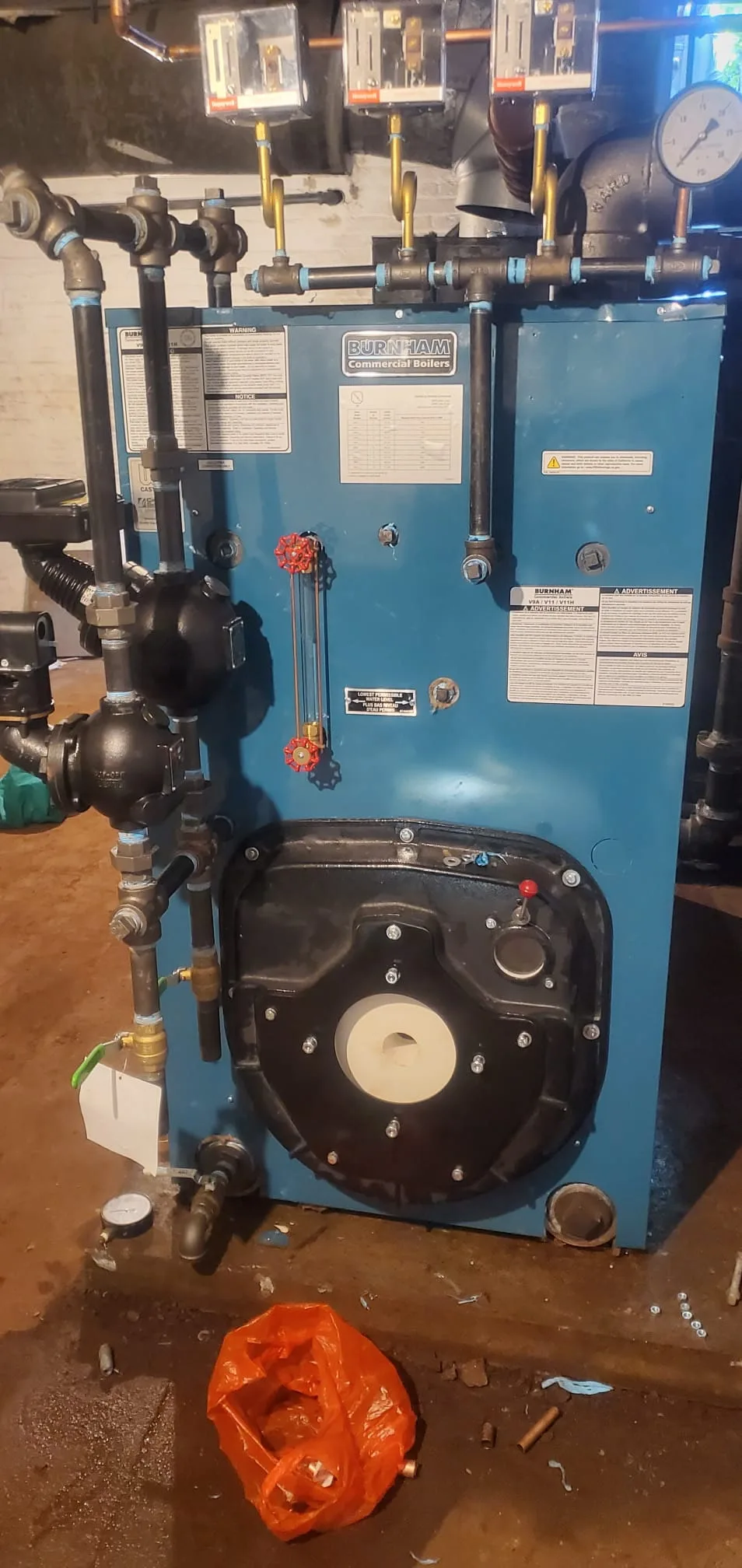
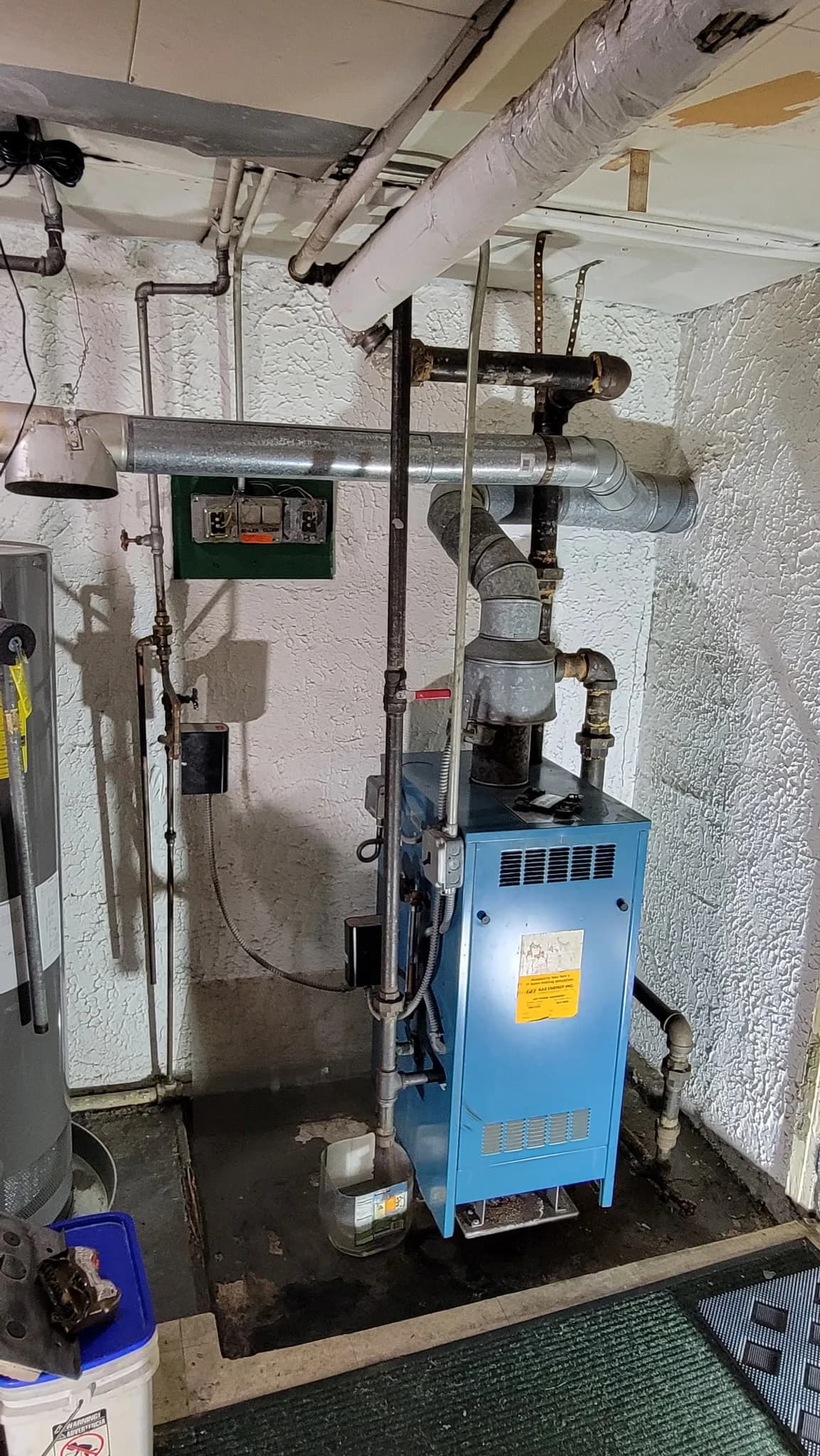
Venting is where conversion budgets get surprised. An old oil boiler typically vents into a masonry chimney that was built for it. A modern high-efficiency condensing gas boiler produces cooler, wetter exhaust that an unlined masonry chimney is not suited to, so the chimney either needs a properly sized liner or the unit gets direct-vented through a sidewall instead. Which one applies depends on the equipment chosen and the building — and on a row house or attached property, sidewall venting has to account for where the exhaust terminates relative to windows and the neighbour's property. This gets decided during planning, not on installation day. In Long Island specifically, we regularly see longer sewer and water line runs on larger suburban lots and well-water and septic-adjacent plumbing considerations in eastern suffolk, both of which factor into how we diagnose and price oil-to-gas conversion calls in the area.
For the full picture on this work — common causes, repair versus replacement, and what actually drives the cost — read our complete guide to oil-to-gas conversion.
Warning Signs
Signs You Need Oil-to-Gas Conversion in Long Island
Uneven heat the existing system has never resolved, suggesting it was sized wrong
Oil deliveries and oil heat have become the largest line in your running costs
The existing oil boiler is at or past its service life and repairs are recurring
Gas is already serving the block and neighbouring houses have converted
Our Process
How It Works
Confirm gas availability first
Before anything else, we help you establish whether the utility can serve your address, what they will charge, and how long their side will take — in writing. Every other step depends on this answer.
Heat-load calculation
We size the new boiler to the building, not to the old unit's rating. A conversion is the one chance to correct an oversizing mistake without paying extra for the privilege.
Survey the gas piping and electrical
Interior gas piping has to carry the new load, and existing runs sized for a cooktop will not. We check what can be reused and what has to be upsized before equipment is selected.
Decide the venting approach
Chimney liner or sidewall direct vent, decided against the equipment and the building — including where exhaust terminates on an attached or row property.
Plan the oil tank decommissioning
Removal or abandonment in place, scheduled as part of the project rather than left as an afterthought, with the condition of a buried tank assessed before the work is priced.
Permits and licensed work
Gas line work and permit-required portions are coordinated through our licensed partner network, with filings and inspections handled as the scope requires — see our Licensing & Compliance page.
Installation, commissioning, and handover
The new system is installed, combustion-tested, and run through a full heat cycle under real conditions. We then walk you through the controls and what the system actually needs from you.
Coverage
Long Island Neighborhoods We Serve
Our Work
Before & After
Oil-to-Gas Conversion in Long Island photos coming soon
Oil-to-Gas Conversion in Long Island photos coming soon
Reviews
What Long Island Homeowners Say
“I had a leak in my living room ceiling and couldn't figure out where it was coming from. Keon and his employee showed up quickly after I reached out. They were professional, patient, and took the time to explain everything to me.”
Lisa B.
Brooklyn, NY · Pipe Repair
“Worked on the complicated pipes in our 125-year-old home. We were satisfied with the work and would hire again.”
Makeba D.
Brooklyn, NY · Pipe Repair
“Keon was able to come the same day. He was very meticulous pinpointing the issue and tried to be as minimally invasive as possible.”
Elias Z.
Brooklyn, NY · Pipe Repair
FAQ
Frequently Asked Questions
It has to be properly decommissioned — emptied, cleaned, and then either removed or abandoned in place to the applicable requirements, with the accompanying documentation. A buried tank carries the extra question of whether it has already leaked, which is a larger problem than the conversion and one worth establishing before the job is priced rather than during it.
Often not yet. Conversion has a payback period, and if the existing boiler is mid-life, correctly sized, and heating evenly, the economics usually argue for waiting. The moment conversion makes most sense is when you are replacing the boiler anyway — then the fuel decision costs you nothing extra to make.
Our portion is typically a small number of days once equipment is on site. The schedule is usually set by the utility's side — service line installation and meter setting — which can run weeks and is not something we control. Plan the project around their timeline, not ours, and start well ahead of heating season.
Usually, though how much depends on fuel prices and on what you are replacing. A meaningful part of the saving often comes from correct sizing rather than from the fuel switch itself — an oversized boiler short-cycles and wastes fuel whatever it burns, so a conversion that also fixes a sizing error tends to outperform one that simply swaps fuel.
Nassau and western Suffolk are broadly well served; availability thins moving east through Suffolk, where some areas have no gas main nearby at all. Because the connection cost is often the largest single item in a Long Island conversion, the utility's written determination for your address is genuinely the first step, not a formality.
The tank is emptied, cleaned, and then removed or abandoned in place to the applicable requirements. The question worth answering early is whether it has leaked, since remediation is a larger job than the conversion. On larger Long Island lots a buried tank is the norm, so we plan for it rather than treating it as an exception.
Yes, we serve homeowners across Long Island, including Hempstead, Garden City, Levittown, Huntington, and every neighborhood in between.
Related Services
Other Services in Long Island
 Emergency
Need Oil-to-Gas Conversion in Long Island?
Call now for same-day scheduling.