
Staten Island · Pipe & Drain
Pipe Repair in Staten Island
Stop the leak before it becomes a renovation. Serving homeowners throughout Staten Island, from Todt Hill to Grasmere.
Basements and finished lower levels are also more common on Staten Island than in the rest of the city, which means frozen pipe risk in unheated or partially heated basement sections is a recurring winter concern we plan for. When it comes to pipe repair, that context shapes how we approach every job in Staten Island — from the tools we bring to the diagnostic steps we take first.
Staten Island pipe repairs benefit from something the rest of our service area rarely offers: access. Detached houses with full basements mean long horizontal runs are frequently exposed and reachable without opening finished walls, so locating and repairing a leak is often less destructive than the same job in an attached rowhouse. The trade-off is exposure — those same long runs pass through unheated basement space with outside air on several sides, which is where the borough's frozen and split pipe calls originate.
Pinhole leaks in aging copper are a signature problem in homes built before the 1980s across Queens and Brooklyn. They come from corrosion working outward from the inside of the pipe, which means the pinhole you can see is rarely the only thin spot on that run — it is simply the first one to open. Galvanized steel fails the opposite way from the perspective of a homeowner: it rusts inward, restricting flow long before it leaks, so the first symptom is usually declining water pressure or rust-colored water rather than anything visibly wet. In Staten Island specifically, we regularly see private sewer lateral root intrusion in larger, tree-lined yards and full basement boiler and water heater replacements, both of which factor into how we diagnose and price pipe repair calls in the area.
For the full picture on this work — common causes, repair versus replacement, and what actually drives the cost — read our complete guide to pipe repair.
Warning Signs
Signs You Need Pipe Repair in Staten Island
Warm or damp spots on a floor, which can indicate a leak in a supply line below
Paint or wallpaper bubbling, or a ceiling beginning to sag
Water stains on ceilings, walls, or floors
Unexplained drop in water pressure
Our Process
How It Works
Leak diagnosis
We trace the source using moisture metering, thermal indicators, and isolation testing — water travels before it shows, so the stain is rarely above the failure.
Identify pipe material and failure mode
Copper, galvanized, PEX, and PVC fail differently and are repaired differently; knowing which you have determines whether this is a one-joint fix or a symptom of a run at end-of-life.
Access and assessment
We determine the minimum access required to reach the damaged section, keeping openings as small as the repair allows.
Repair or section replacement
The damaged pipe or joint is repaired or replaced with properly matched materials and transition fittings, not whatever is quickest to fit.
Pressure test
The repaired line is pressure tested and watched under load to confirm the leak is fully resolved before anything is closed up.
Report on surrounding pipe
We tell you honestly what the rest of that run looked like while it was open — whether this was an isolated failure or the first of several.
Coverage
Staten Island Neighborhoods We Serve
Our Work
Before & After
Pipe Repair in Staten Island photos coming soon
Pipe Repair in Staten Island photos coming soon
Reviews
What Staten Island Homeowners Say
“I had a leak in my living room ceiling and couldn't figure out where it was coming from. Keon and his employee showed up quickly after I reached out. They were professional, patient, and took the time to explain everything to me.”
Lisa B.
Brooklyn, NY · Pipe Repair
“Worked on the complicated pipes in our 125-year-old home. We were satisfied with the work and would hire again.”
Makeba D.
Brooklyn, NY · Pipe Repair
“Keon was able to come the same day. He was very meticulous pinpointing the issue and tried to be as minimally invasive as possible.”
Elias Z.
Brooklyn, NY · Pipe Repair
FAQ
Frequently Asked Questions
We keep access openings as small as the repair allows, and drywall patching can be arranged as part of the job — just tell us upfront so it is in the scope and the estimate.
Yes. Our technicians work with copper, PEX, PVC, and galvanized steel piping systems, including the transitions between them, which are where a lot of NYC failures actually occur.
If it is safe to reach, shut off the nearest supply valve, or the main if the leak is not isolated to one fixture. Keep water away from outlets and electrical panels, and move what you can out of the affected area — containment before we arrive limits the damage considerably.
It depends most on access and pipe material, not on the size of the leak itself — an exposed joint in an open basement and the same failure inside a finished wall are very different jobs. We locate the leak and assess access first, then give you the number before any work starts.
Frequently, yes. Detached houses with full basements leave long runs exposed and reachable, so a repair often needs no finished wall opened at all. Where a leak is inside a wall the picture changes, but the baseline access is considerably better than an attached rowhouse offers.
Treat it as a specific fault rather than bad weather. A run that freezes repeatedly has a draft reaching it — a foundation vent, a service penetration, a failed basement window. Sealing that does more than adding insulation over the top of the problem.
Yes, we serve homeowners across Staten Island, including Todt Hill, Great Kills, Annadale, St. George, and every neighborhood in between.
Related Services
Other Services in Staten Island
From the Blog
More on Pipe Repair
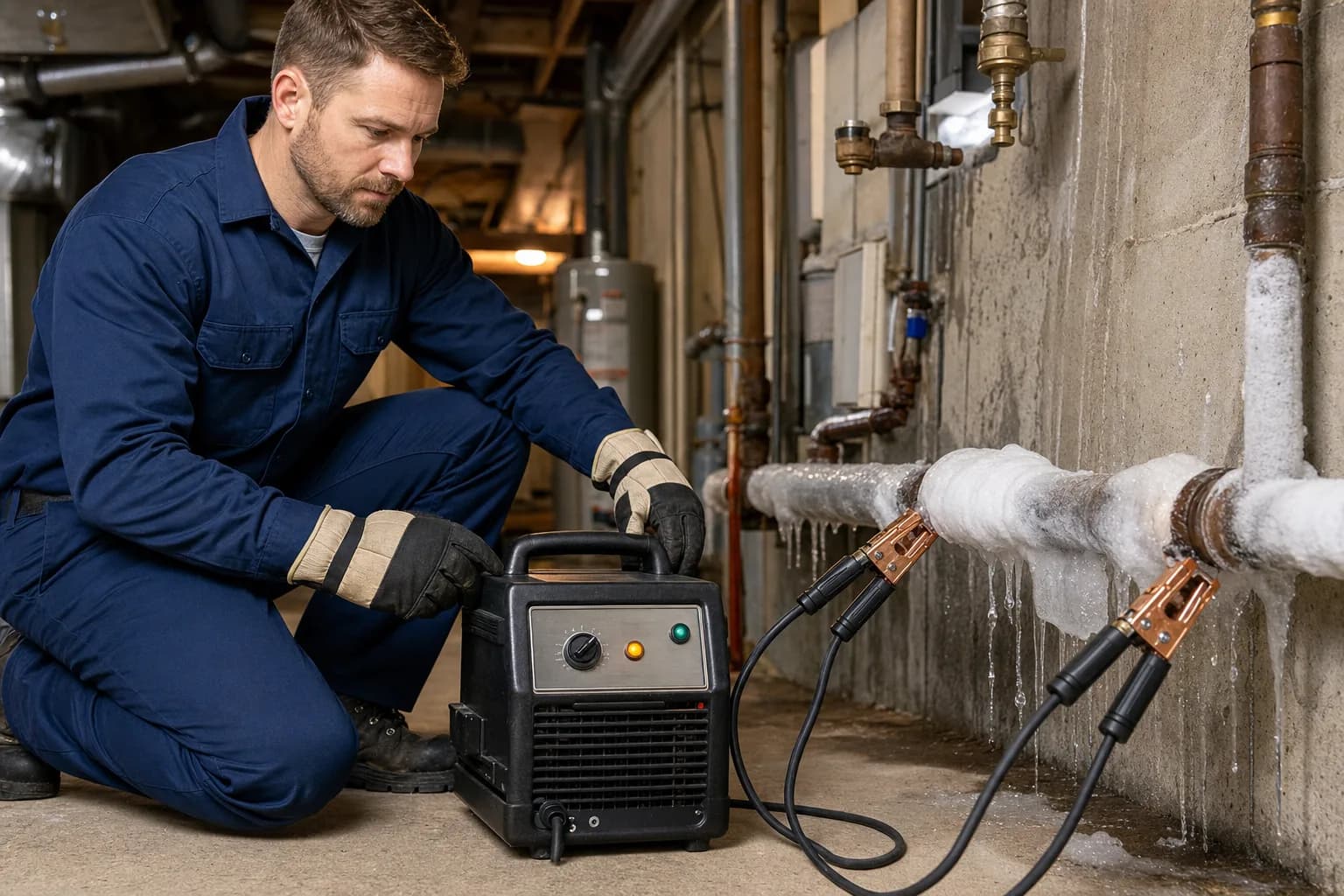
Why Pipes Burst During Winter
It's not the ice that breaks your pipe — it's the pressure buildup behind it. Here's the science and the fix.
Signs Your Home Still Has Galvanized Pipes
If your home was built before the 1960s, there's a good chance galvanized steel is still part of your plumbing.
Preventing Frozen Pipes in NYC Basements
Basements are the single most common freeze point in NYC homes — here's how to winterize yours.
Need Pipe Repair in Staten Island?
Call now for same-day scheduling.